

What Happens If the Weather Is Bad During Your Grenadines Yacht Charter?
Introduction
Bad weather does not usually mean your Grenadines yacht charter is ruined.
More often, it means the captain changes the plan.
You might leave an anchorage earlier than expected, delay an exposed crossing, visit the islands in a different order or spend the night somewhere more protected. The Grenadines are spread across an active trade-wind sailing area, so flexibility is a normal part of cruising here.
During the main December to May charter season, conditions are generally favorable, with steady easterly trade winds and relatively predictable weather. Short tropical showers can still occur, and periods of stronger wind or swell occasionally affect particular passages and anchorages.
The important thing to remember is that your itinerary is a plan, not a guarantee.
What Will the Captain Do If the Weather Changes?
Your captain continuously monitors forecasts, wind strength, swell direction and local conditions throughout the charter.
If the original itinerary no longer makes sense, the crew may:
Change the order of the islands
Leave earlier in the morning
Delay a crossing
Spend longer at a protected anchorage
Replace one destination with another
Move the yacht before conditions deteriorate
Shorten an exposed passage
Adjust water-sports plans
This is particularly relevant in the Grenadines because conditions can vary significantly between the protected side of an island and the open channels separating the islands.
For example, the St Vincent to Bequia passage can experience compressed trade winds, current and ocean swell. Local sailing guidance recommends using favorable weather windows and often making exposed crossings earlier in the day before winds strengthen.
The captain's priority is always the safety and comfort of the yacht and guests.
Standard yacht charter agreements also recognize this. Under the MYBA charter agreement, the captain is not required to follow an instruction that would take the yacht somewhere they reasonably consider unsafe, and yacht use cannot be guaranteed in bad weather for every planned passage within the cruising area.
Does Rain Mean You Lose the Day?
Usually not.
Caribbean rain is often very different from a full day of persistent bad weather in northern Europe.
A tropical shower or squall may arrive quickly, produce heavy rain and stronger wind, and then move through. During the wetter months, squalls become more frequent, while the main December to May season is generally drier and more stable.
If rain arrives while you are anchored, you still have the yacht.
You can have lunch inside, relax in the saloon, watch a film, enjoy the Jacuzzi if the yacht has one or simply wait for the shower to pass.
The crew can then launch the tender or water toys once conditions improve.
A cloudy morning in Bequia does not necessarily mean the afternoon in Mustique will be the same.
Where Can the Yacht Find Shelter?
One advantage of cruising an island chain is that the captain usually has alternatives.
The prevailing winds around the Grenadines typically come from the east or northeast, which means the western and southern sides of many islands provide better protection.
Instead of continuing toward an exposed anchorage, the captain may select a more protected bay or adjust the route around the weather.
Admiralty Bay in Bequia is one of the region's established protected harbors, while different bays around Union Island, St Vincent and the southern Grenadines can provide alternatives depending on the wind and swell direction.
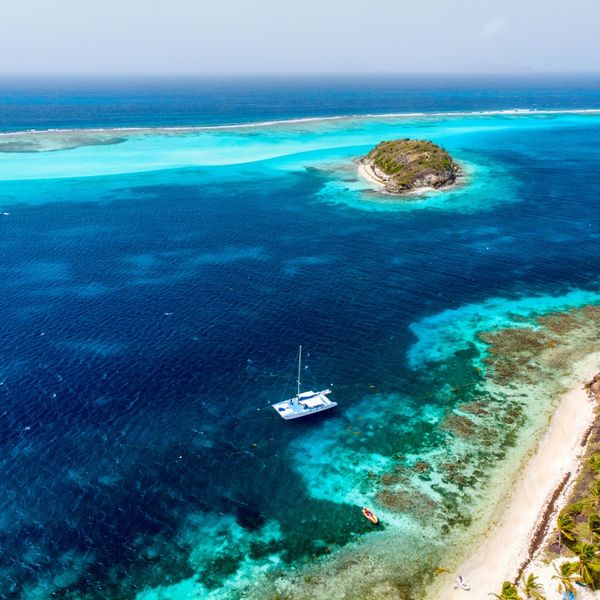
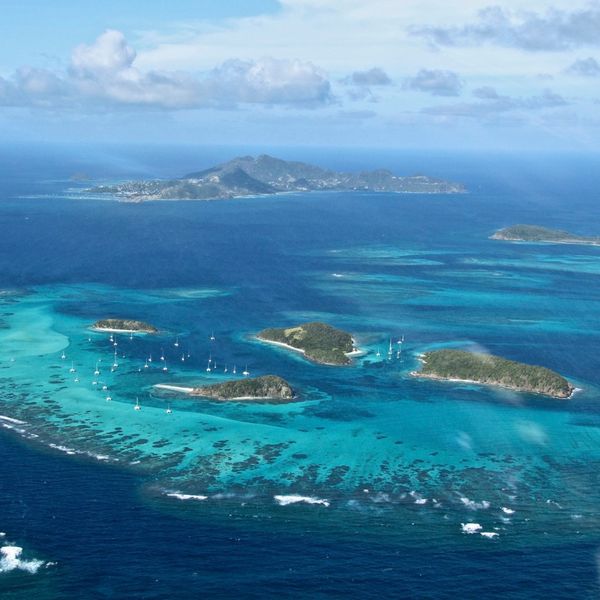
Even the famous Tobago Cays are protected to a degree by Horseshoe Reef, but that does not mean they are suitable in every possible condition. Strong trade winds can still make the anchorage uncomfortable.
If the forecast makes Tobago Cays unpleasant on Tuesday, the captain may simply visit somewhere else first and return on Wednesday or Thursday.
That flexibility is one of the biggest advantages of a private yacht charter.
Can Bad Weather Cancel a Grenadines Yacht Charter?
Normal rain, stronger trade winds or uncomfortable seas usually change the itinerary rather than cancel the charter.
The more serious concern is tropical-storm or hurricane activity.
The main Grenadines yacht charter season deliberately falls between roughly December and May, while June through November corresponds with the wetter Atlantic hurricane season and a greater risk of tropical storms. Many charter yachts reduce operations or reposition during this period.
If severe weather genuinely prevents the yacht from operating, what happens financially depends on your specific charter agreement, insurance and circumstances.
There is no universal rule that a missed island, rough day or itinerary change automatically generates a refund. Even under widely used MYBA-style charter terms, weather can restrict where the captain considers it safe to take the yacht.
This is why travel insurance and understanding your charter contract before departure are important, particularly when booking outside the primary season.
How Can You Make Your Charter More Weather-Proof?
The best strategy is simply not to become emotionally attached to an exact day-by-day itinerary.
You can absolutely arrive with a plan such as:
Bequia → Mustique → Canouan → Tobago Cays → Mayreau → Union Island
But think of those destinations as priorities rather than appointments.
Your captain may discover that Tuesday is perfect for Tobago Cays while Wednesday is not. It makes little sense to visit on Wednesday simply because that was what the original itinerary PDF said.
A good Grenadines charter should adapt around:
Weather
Wind direction
Sea conditions
Guest comfort
Your favorite destinations
How much sailing you enjoy
Where you decide you want to stay longer
Current Grenadines charter itineraries explicitly emphasize this flexibility, with captains adjusting routes around weather and guest preferences rather than treating the published itinerary as fixed.
So if the weather changes during your Grenadines yacht charter, expect the itinerary to change before you expect the holiday to change.
You may miss one anchorage and discover another.
You may spend an extra afternoon in Bequia instead of making an uncomfortable crossing.
Or the captain may simply move departure forward by a few hours and keep almost the entire itinerary intact.
That flexibility is not a failure of the charter plan.
It is one of the reasons you have an experienced captain onboard in the first place.
Ready for an Unforgettable Yacht Charter in Grenadines?
At All Blue Yachting, our expertise comes from genuine experience at sea. Many of our brokers have lived and worked aboard yachts themselves, giving them first-hand insight into every aspect of the charter experience.
From your initial enquiry to the final day of your journey, we’re here to guide you through every step with trusted advice, personalised recommendations, and seamless support throughout your charter.
- We take the time to understand your vision and bring it to life.
- We handpick the finest yachts tailored to your preferences.
- We manage all paperwork and secure transactions for complete peace of mind.
- We design personalised itineraries built around your travel style.
- We support you every step of the way, from enquiry to final accounts.